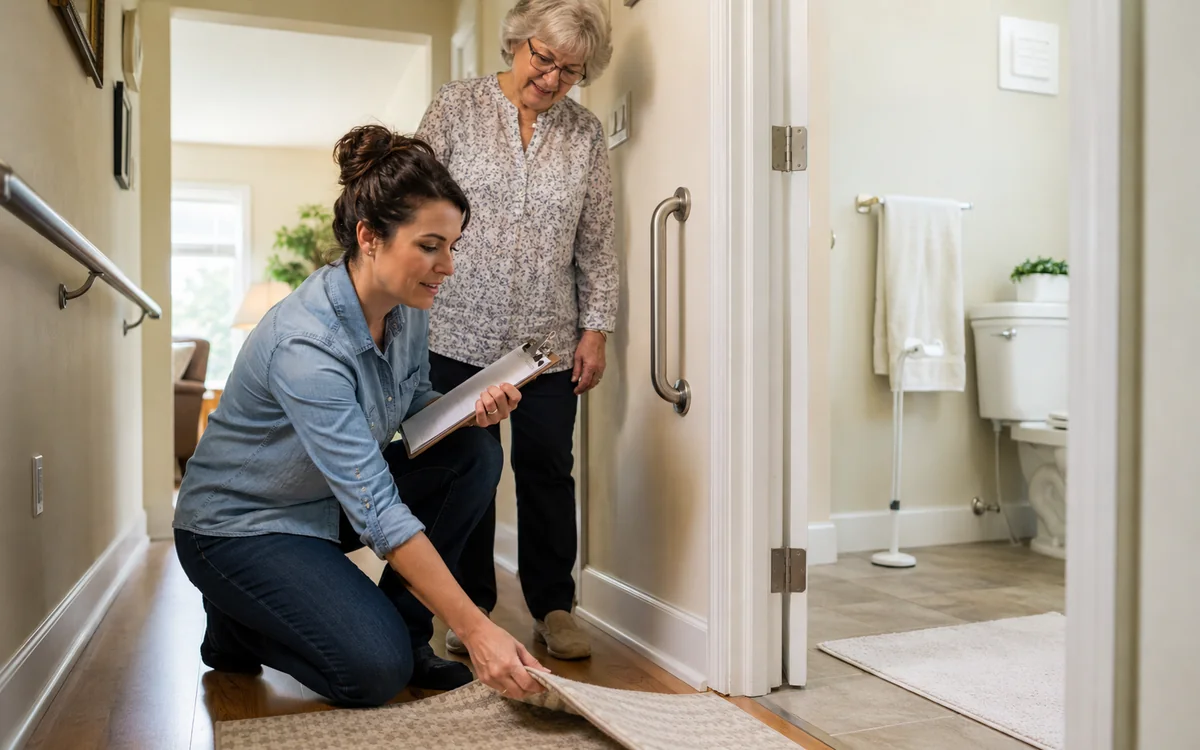
The best home safety devices for seniors are not always the flashiest ones. They are the fixes that make daily routines safer: a brighter hallway, a grab bar that is actually anchored correctly, a clear path to the bathroom, a shower chair that gets used, and a way to call for help if something goes wrong.
That sounds less exciting than a shiny gadget box, which is probably why so many households buy the gadget first and notice the loose rug later. I get it. A motion sensor feels like progress. A rug pad feels like homework with adhesive.
But if you are helping an older parent, planning for your own aging-in-place setup, or trying to make a home safer after a near miss, start with the boring hazards. They are often the ones people step around for years until the day they do not.
Faye’s rule: Fix the walking path before buying another device. A gadget cannot make a cluttered hallway stop being a cluttered hallway.
Start with the goal, not the product
A safety device should solve a specific daily problem. Before shopping, name the moment you are trying to make safer. Is it getting out of bed at night? Turning in the shower? Carrying laundry down stairs? Standing from the toilet? Remembering medication? Opening the front door for help?
The Centers for Disease Control and Prevention says falls can be prevented, and its fall-prevention guidance for older adults includes simple home changes such as removing trip hazards, adding grab bars near tubs, showers, and toilets, putting railings on both sides of stairs, and improving lighting. That is not glamorous advice, but it is exactly where a practical checklist should begin.
Official source: CDC: Preventing Falls and Hip Fractures.
Walk through the home at the times when the risk is highest. Nighttime bathroom trips, wet bathroom floors, stairs, entryways, and busy kitchen routines reveal problems that a normal daytime tour can miss. I once ignored a dim hallway for months because I technically knew where everything was. That is a terrible lighting plan. “Memory” is not a fixture.
The quick-priority checklist
If you only have one hour, check the places where feet, water, darkness, and reaching collide. Those are the household danger zones that tend to turn small annoyances into bigger injuries.
| Area | What to check first | Useful device or fix |
|---|---|---|
| Bedroom to bathroom path | Darkness, cords, shoes, pet items, uneven rugs | Motion night lights, clear walkway, bedside flashlight |
| Bathroom | Wet floors, tub entry, toilet transfers, towel bars being used for support | Grab bars, shower chair, handheld shower head, non-slip surface |
| Stairs | One-sided railings, poor lighting, loose carpeting, clutter on steps | Railings on both sides, brighter bulbs, contrast tape, secured treads |
| Kitchen | Reaching, heavy items overhead, slippery mats, rushed routines | Pull-down shelves, stable step stool only when appropriate, task lighting |
| Entryway | Thresholds, poor porch lighting, loose doormats, packages in the path | Threshold ramp, motion light, secure mat, bench or handhold |
| Whole home | Ability to call for help, smoke and carbon monoxide alarms, charged phones | Medical alert system, smart speaker, wearable button, checked alarms |
This is not a replacement for medical advice, physical therapy, or an occupational therapist’s home assessment. It is a practical first pass for seeing what deserves attention before you start filling a cart.
Lighting is the cheapest safety device people underestimate
Better lighting helps people see hazards before they become decisions made mid-step. Add light where someone actually moves: the bed, bathroom route, hallway corners, stairs, kitchen work areas, entryway, laundry area, and garage step.
Useful options include plug-in night lights, motion-activated lights, under-cabinet strips, brighter bulbs in existing fixtures, bedside lamps that are easy to reach, and flashlights that stay in predictable places. The goal is not to make the house look like an airport runway. The goal is to avoid walking through a shadowy hallway while half-awake and trying to remember where the laundry basket migrated.
Check that switches are reachable before entering a room or stairway. If someone has to cross the dark space to turn on the light, the system is already being rude.
Bathroom devices deserve the first serious money
Bathrooms combine water, hard surfaces, turning, sitting, standing, and modesty, which is quite a design achievement from the “what could go wrong” department. This is where cheap substitutes can be risky.
Start with grab bars, not towel bars. A towel bar is for towels. It is not a secret safety rail with better branding. Properly installed grab bars should be anchored to support real force, and a professional installer may be worth it if wall structure is uncertain.
Consider these bathroom fixes:
- Grab bars: Place near the toilet and inside or just outside the shower or tub where the person actually needs support.
- Shower chair or transfer bench: Useful when standing, stepping over a tub wall, or turning in the shower has become unsteady.
- Handheld shower head: Helps reduce awkward reaching and turning.
- Non-slip shower surface: Choose a stable surface that does not curl, slide, or trap grime.
- Raised toilet seat or toilet safety frame: Can help with sitting and standing, but it needs to fit the person and the bathroom layout.
- Clear floor space: Remove small rugs that bunch, slide, or catch a toe.
Faye’s rule: If someone is using furniture, a towel bar, or a sink edge to stand up, that is not independence. That is the house negotiating badly.
Rugs, cords, and clutter are not personality traits
The fastest safety upgrade is often removing something, not buying something. Loose rugs, curled mat corners, extension cords, low baskets, pet toys, decorative stools, shoe piles, and “temporary” boxes can become everyday trip hazards.
This is where families get strangely sentimental. A rug can be beautiful, expensive, or inherited and still be a bad idea in a high-traffic path. If a rug stays, make sure it lies flat, has a proper backing, and does not bunch at the edges. If it cannot behave, it leaves. The rug had its chance.
Keep a clear walking route between the bed, bathroom, kitchen, favorite chair, entryway, and phone. Do the check while carrying something in one hand, because real life does not politely wait until both hands are free.
Stairs and entryways need boring reliability
Stairs should not depend on balance, bravery, or a hand skimming along the wall. Check whether railings exist on both sides, whether they are secure, and whether the first and last steps are easy to see.
Useful stair and entry fixes include:
- Railings on both sides of stairs where possible
- Brighter stair and landing lighting
- Contrast strips on step edges if depth is hard to judge
- Secured stair treads or carpet
- A bench near the door for putting on shoes
- A motion light outside the entry
- A secure doormat that does not slide or curl
- Threshold ramps when small height changes create tripping problems
If the stairs are steep, uneven, narrow, or already involved in a near miss, do not treat that as a shopping problem only. It may be time for a contractor, occupational therapist, or aging-in-place specialist to look at the space.
Medical alert devices and fall detection: helpful, but not magic
A medical alert device is mainly a help-calling tool, not a fall-prevention device. It can matter a lot for someone who lives alone, has had a fall, worries about getting stranded, or does not always carry a phone.
Compare these details before choosing one:
- Monthly subscription cost
- Whether it works inside and outside the home
- Cellular coverage in the home
- Battery life and charging habits
- Water resistance for shower use
- Fall-detection availability and limitations
- Who receives alerts
- Cancellation terms
- Whether the user will actually wear it
Fall detection can be useful, but it is not a promise that every fall will be detected or every alert will be perfect. If the person refuses to wear the device, leaves it charging in another room, or dislikes the button enough to hide it in a drawer, the best feature list in the world will sit there looking expensive.
Smart home safety devices can help, if they are simple enough
Smart devices should reduce friction, not create a tech-support hobby for the family. A voice assistant can help someone call a contact, set reminders, control lights, or check the weather without walking across the room. Motion lights, smart plugs, door sensors, and stove-monitoring devices may help in the right household.
Before adding smart devices, ask:
- Does the home have reliable Wi-Fi?
- Who will maintain the app and passwords?
- What happens during a power outage?
- Does the person understand how to use it?
- Will alerts go to someone who can respond?
- Are privacy settings acceptable?
A simple plug-in light that always works may beat a complicated smart-home routine that breaks every time the router sighs.
Kitchen safety is mostly about reach, heat, and hurry
Look for anything that makes someone reach too high, bend too low, or rush around heat. Put heavy pots, everyday dishes, pet food, and frequently used pantry items between shoulder and knee height. Move rarely used appliances out of the daily path.
Consider task lighting under cabinets, lever-style handles where gripping is difficult, a stable chair with arms nearby, and a timer system that is easy to hear. Avoid turning the kitchen into a maze of helpful gadgets. More stuff on the counter can create more reaching and less workspace, which is the opposite of helpful. Naturally, the kitchen will try to collect objects anyway, because counters are magnets with granite countertops.
If memory, dizziness, medication timing, or cognitive changes are part of the concern, involve a clinician or qualified professional. That is bigger than rearranging the spice shelf.
The device buying test
Before buying any safety product, make it pass a real-life test. The product should fit the person, the room, and the routine.
| Question | Why it matters |
|---|---|
| What exact problem does this solve? | Prevents buying a gadget because it sounds responsible. |
| Will the person actually use it? | Comfort, pride, habit, and appearance matter. |
| Does it need professional installation? | Poor installation can make a safety product unsafe. |
| Does it create another trip hazard? | Cords, mats, stands, and chargers can backfire. |
| Does it require charging, Wi-Fi, or a subscription? | Maintenance failures can quietly remove the protection. |
| Can it be cleaned easily? | Bathroom and kitchen devices need practical upkeep. |
| What happens if it fails? | Backup plans matter, especially for alert systems. |
When to call a professional
Some changes are too important to guess through. Call a professional when the work involves structural support, electrical changes, stair railings, ramps, grab-bar anchoring, wheelchair access, repeated falls, major mobility changes, or disagreements about what is safe.
An occupational therapist can often help match home changes to the person’s actual abilities and routines. A contractor with aging-in-place experience can help with ramps, bathroom modifications, widened entries, safer flooring, and more permanent changes. If there has already been a fall, near fall, dizziness, medication change, or sudden decline, involve a healthcare professional instead of treating the house like the only problem.
The CDC encourages older adults to talk with a doctor or health care provider about fall risk and specific prevention steps, including medication review, eye checks, strength and balance exercise, and home changes.
Official source: CDC: About Older Adult Fall Prevention.
A simple first-week plan
Do this in phases so the project does not turn into a weekend renovation festival with receipts.
- Day 1: Clear the main walking paths, especially bedroom to bathroom.
- Day 2: Add night lighting and check all stair and entry lights.
- Day 3: Remove or secure rugs and mats that shift, curl, or bunch.
- Day 4: Inspect the bathroom and list where support is needed.
- Day 5: Check stairs, railings, steps, porch, and thresholds.
- Day 6: Review phones, emergency contacts, alert options, and smoke and carbon monoxide alarms.
- Day 7: Decide which tasks need a professional instead of a brave relative with a drill.
Faye’s rule: A safety device nobody will use is just clutter with a product page.
The bottom line
Start with the rooms and routines where a small mistake would matter most. For many homes, that means lighting, walking paths, bathroom support, stairs, entryways, and a reliable way to call for help.
Senior safety devices can be worth buying, and this category has plenty of legitimate product potential. But the best article, and the best household plan, should not start with a shopping list. It should start with the person, the path, and the problem. The products come after that, not before it.
For more household risk checks, read the small home repairs I do not put off, the small home habits that make life less chaotic, and the repair-or-replace math I use before a bigger purchase.