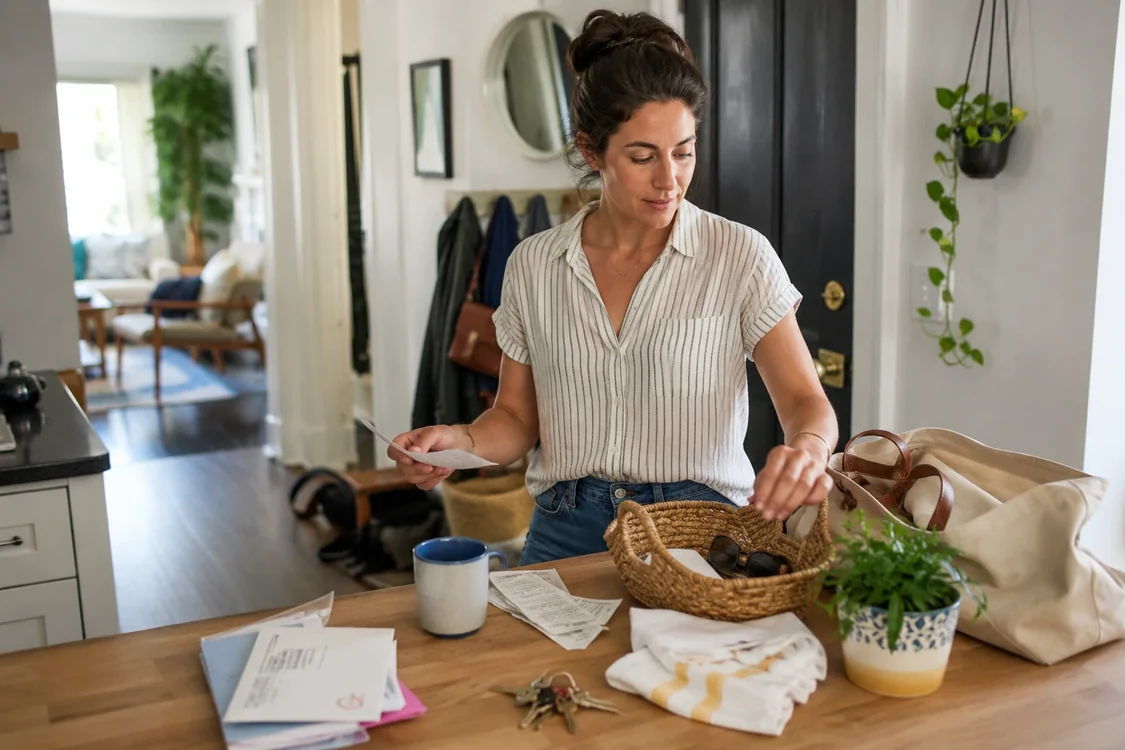
A calmer house does not usually come from one heroic cleaning day. I wish it did, because that would be very cinematic and probably come with a soundtrack. Real life is less generous.
Most of the time, a house starts feeling chaotic because tiny decisions pile up. Mail lands wherever. Keys vanish. Bags sit by the door. The counter becomes a holding zone for items nobody wants to make a decision about.
I used to clean the kitchen counter just to immediately cover it with mail, sunglasses, receipts, and one object nobody in the house would claim. That was not a cleaning problem. That was a system problem wearing crumbs.
These are the small habits that help my house feel less chaotic without requiring a full personality transplant.
Faye’s rule: If a habit requires me to become a different person, it is not a habit. It is fiction.
1. Give keys, mail, and bags a landing zone
The stuff that comes into the house needs a place to land. Otherwise it spreads across every flat surface like it has been released into the wild.
A landing zone stops clutter at the door. It can be a tray, basket, hook, drawer, or small shelf. The exact setup matters less than the fact that keys, mail, sunglasses, and bags stop becoming a scavenger hunt.
2. Reset one surface before bed
I do not reset the whole house at night. That is adorable in theory and offensive in practice. I pick one surface: the kitchen counter, coffee table, dining table, or entryway.
One clear surface makes the whole room feel calmer. It gives your eyes somewhere to rest and keeps tomorrow from starting with yesterday’s little mess parade.
3. Keep one small “return to room” basket
Every house has items that wander: socks, toys, chargers, books, hair ties, mail, random tools, and the mysterious object everyone steps around but nobody moves.
A return basket gives wandering items a temporary home. Once a day, or whenever it starts looking ridiculous, carry the basket around and return things where they belong. It is not glamorous. It works anyway, rude as that is.
4. Stop putting decisions on the counter
A lot of clutter is not trash. It is delayed decision-making. A receipt you might need. A school paper. A return label. Something you need to ask someone about. A thing you are not ready to deal with, so the counter gets punished.
Decision clutter needs a decision spot. I keep one folder or tray for papers and small items that need action. It still exists, but at least it stops colonizing the kitchen.
Faye’s rule: If clutter keeps returning to the same place, the place is telling me something.
5. Make everyday items easier to put away
If something is annoying to put away, it probably will not get put away. Shoes need an easy spot. Cleaning spray needs to live near where it gets used. The lunch containers should not require a wrestling match with a cabinet.
The easier path usually wins. If the house keeps getting messy in the same place, the system is probably too fussy for real life.
6. Do a five-minute fridge glance
A chaotic fridge quietly creates food waste. Things hide in the back, leftovers become science, and suddenly you are buying more spinach while the current spinach is auditioning for compost.
A quick fridge glance helps prevent duplicate buying and forgotten food. I look for what needs to be used, what should move forward, and what needs to leave before it starts developing opinions.
7. Keep fewer backups in easier places
Backups are useful until they become a household treasure hunt. Extra toothpaste, batteries, paper towels, soap, light bulbs — all good things, unless nobody knows where they are.
Backups should be visible enough to prevent rebuying. I would rather keep fewer extras in one obvious place than stash twelve useful things in six locations like a squirrel with a warehouse account.
8. Put donation items straight into a bag
The moment I decide something is leaving, it goes into a donation bag. Not a pile. Not a chair. Not a ceremonial corner where unwanted items go to reconsider their life choices.
A donation bag turns a decision into motion. Once it is full, it leaves the house. The trick is not letting the bag become permanent decor, because naturally humans will decorate around anything if given enough time.
Faye’s rule: A good home system should still work when I am tired, distracted, or carrying groceries.
9. Fix one annoying friction point at a time
Every home has friction points: the drawer that jams, the pile that returns, the shoes that never make it into the closet, the cabinet everyone hates using. Fixing one is more useful than vaguely promising to “get organized.”
One friction point is small enough to actually solve. Add a hook. Move the basket. Clear the drawer. Put the scissors where people use them. Small fixes beat giant plans that require a clipboard and a better species.
10. Make the house easier, not perfect
Perfect homes are for photo shoots, real estate listings, and people who may not own ketchup. A real home needs to function for tired people, busy mornings, groceries, laundry, pets, and the occasional mystery object on the stairs.
The goal is a house that is easier to live in. Not spotless. Not magazine-ready. Just less annoying, less scattered, and less likely to make you mutter under your breath while looking for your keys.
The bottom line
The point of these habits is not to turn your house into a showroom. That sounds exhausting, and frankly, suspicious.
The point is to remove a little friction from daily life. Fewer lost keys. Fewer duplicate purchases. Fewer piles that silently judge you from across the room. Small habits do not fix everything, but they make the house feel less like it is constantly asking for management.
If you have one tiny home habit that made your space feel calmer, tell me. I love the boring little tricks that actually work, because those are usually the ones real people can keep doing.
This connects closely with things I stopped keeping just in case. It also fits with pantry reset that reduced duplicate buying, because the same small decisions tend to overlap in real life.