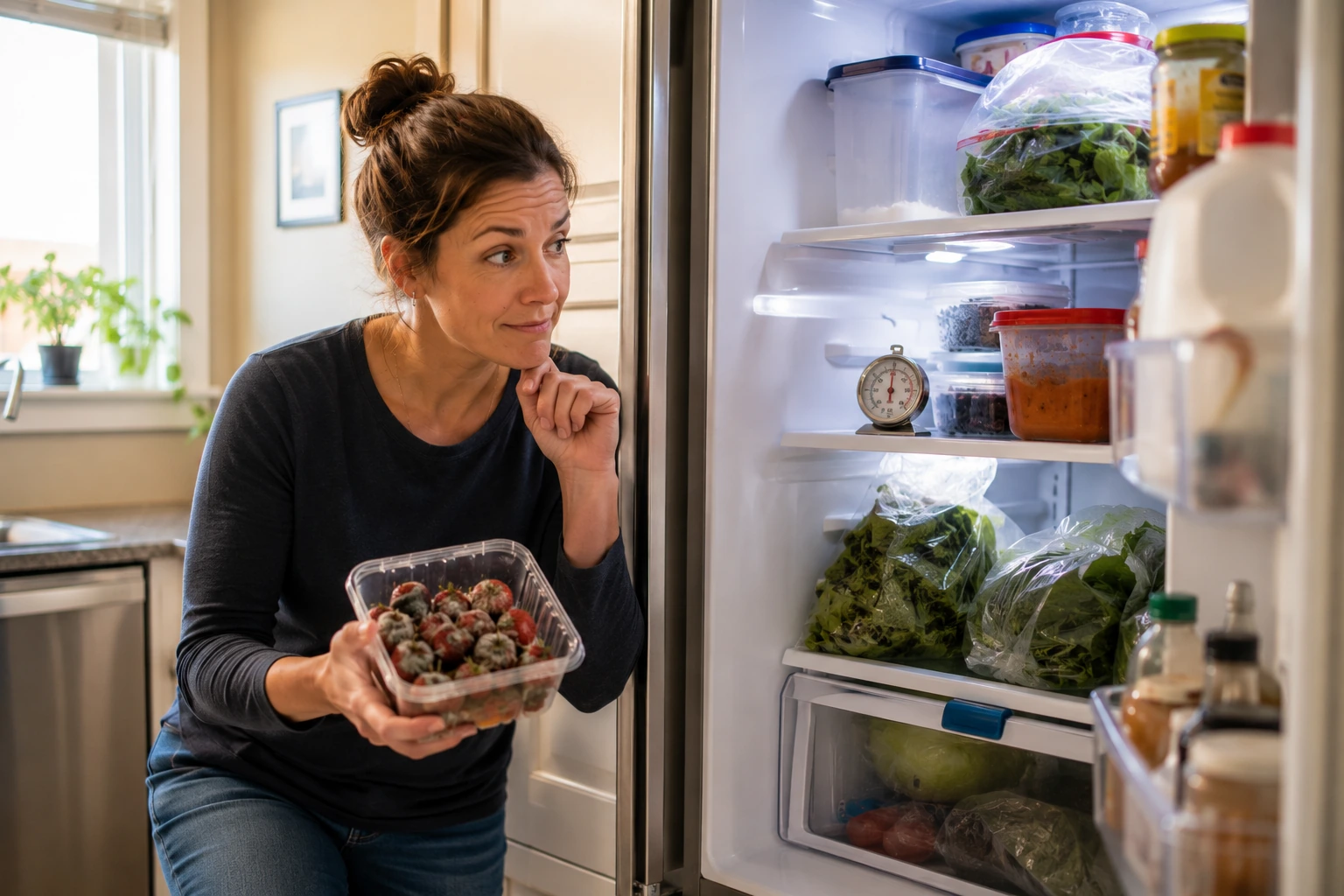
The refrigerator light comes on. Cold air rolls out when the door opens. The drinks feel chilled. Yet the berries soften too quickly, the lettuce wilts, leftovers smell questionable sooner than expected, or food near one shelf freezes while food somewhere else does not stay reliably cold.
I used to treat “the refrigerator feels cold” as proof that it was doing its job. Then I put an appliance thermometer inside and discovered that one area was noticeably warmer than another. The cold blast near the vent had been giving me confidence the rest of the cabinet had not earned.
Cold air on your hand is not a temperature reading. Food can spoil too quickly because the refrigerator is warmer than it seems, because temperatures swing during the day, because airflow is blocked, or because certain foods are stored in the wrong zone. Sometimes the refrigerator is working normally and the problem began before the groceries reached home.
“Feels cold” is not a measurement
A refrigerator can feel cold near an air outlet while another shelf, drawer, or door bin stays warmer. Cold air is distributed by vents and fans, and the pattern changes when shelves are crowded, containers block vents, the door opens repeatedly, or the appliance cycles on and off.
Measure the cabinet rather than judging the first breath of cold air. USDA and FDA guidance says a refrigerator should be kept at 40°F or below. An appliance thermometer provides a more useful check than touching a carton or relying only on a built-in display.
The temperature shown on a control panel may represent a target setting, a sensor location, or a recent reading rather than the temperature of every food item. Refrigerator designs differ, so consult the appliance manual for the recommended control setting and thermometer placement.
Check the actual temperature in more than one place
Place an appropriate refrigerator thermometer where the manufacturer or thermometer instructions recommend, allow it time to stabilize, and record the reading. When the spoilage pattern seems limited to one area, compare more than one location rather than moving the same thermometer every few minutes and expecting a meaningful result.
Look for a pattern, not one dramatic number. Note the middle shelf, lower shelf, door area, and any spot where food freezes or spoils repeatedly. Also record whether the reading was taken after grocery loading, repeated door opening, a power interruption, or a long quiet period.
If readings remain above the safe range, move highly perishable food to a reliably cold refrigerator or cooler with adequate cold sources while you determine the cause. Food safety comes before winning an argument with an appliance.
Warm zones and cold zones are real
Temperatures can vary inside the cabinet. Door shelves experience more warm-air exposure each time the door opens. Areas close to vents or the back wall may be colder. Crisper drawers alter humidity more than temperature, and their performance depends on how they are loaded and adjusted.
Store the most temperature-sensitive foods where cooling is steady. Milk, eggs, raw meat, seafood, and leftovers generally need more stable conditions than a refrigerator door can offer. Follow the appliance manual and current food-safety guidance for your specific foods and refrigerator layout.
If one carton freezes while produce elsewhere wilts, the appliance may have uneven airflow, blocked vents, an incorrect setting, or a control problem. That symptom is more informative than simply saying the refrigerator is “cold.”
Blocked airflow can create a cold illusion
A refrigerator needs room for chilled air to move around shelves and return to the cooling system. Large containers, grocery bags, boxes, and tightly packed food can obstruct vents. The area beside the vent may feel impressively cold while food behind the blockage sits in a warmer pocket.
Open a clear path around visible vents. Do not remove panels or probe internal openings. Rearrange containers according to the manual, leave practical space between items, and avoid pressing food tightly against the back wall unless the manufacturer specifically permits it.
An extremely empty refrigerator can also change how quickly temperatures shift when the door opens, while an overfilled one can restrict circulation. The goal is useful storage without turning every shelf into refrigerated masonry.
The refrigerator door is convenient, not always steady
Door bins are easy to reach, which is exactly why they are exposed to room air so often. Condiments and less temperature-sensitive items may tolerate that location better than milk, eggs, leftovers, or other highly perishable foods.
Move repeatedly spoiled perishables out of the door. Keep containers from protruding far enough to prevent the door from closing, and check that tall bottles or overloaded bins are not striking an interior shelf.
A door that looks closed may still be resting against a package. Check the full perimeter rather than trusting the light or alarm alone.
Crisper humidity matters for produce quality
Crisper controls usually manage humidity by changing how much moisture escapes. Different produce behaves differently: leafy greens often benefit from higher humidity, while some fruits release ethylene and may keep better with more ventilation or separate storage.
Use the drawer controls for the food actually inside them. A label such as “fruit” or “vegetable” is more useful than assuming every drawer should be set the same way. Consult the refrigerator manual and FoodKeeper guidance for specific foods.
Produce can also arrive bruised, overheated, overripe, or already losing quality. If only one type of produce spoils quickly while measured refrigerator temperatures remain safe and stable, the issue may have begun during transport, store display, or the trip home.
How groceries get home matters
Cold food begins warming in the cart, checkout line, car, and kitchen. FoodSafety.gov advises keeping perishable foods at 40°F or below and refrigerating them promptly. In hot conditions, a vehicle can become a hostile little greenhouse with cup holders.
Put perishables away before doing unrelated errands. Use insulated bags and cold sources when travel will be extended, especially in hot weather. Do not taste food that arrived or sat at an unsafe temperature to determine whether it is safe.
If grocery spoilage appears after a long drive, delivery delay, or food sitting outside, the refrigerator may be receiving food that has already spent too much time warm.
Leftovers need to cool safely
Large, deep containers of hot food cool slowly in the center. USDA guidance recommends refrigerating leftovers promptly and dividing large amounts into shallow containers so they cool more quickly.
Do not leave leftovers on the counter waiting for them to become “fully cool.” Follow current USDA and FoodSafety.gov time and temperature guidance. Keep raw meat, poultry, and seafood sealed or securely wrapped so juices cannot contaminate ready-to-eat foods.
Labeling leftovers with a date can help distinguish a refrigerator problem from food simply being stored beyond recommended limits. The FoodKeeper resource provides item-specific storage guidance.
Check whether the door actually seals
Crumbs, sticky residue, warped gaskets, loose packaging, and overloaded door bins can prevent a complete seal. Warm, humid room air then enters the cabinet, increasing temperature variation and sometimes contributing to condensation or frost.
Inspect the accessible gasket surface and door path. Clean only as directed by the manufacturer. Look for tears, gaps, hardened areas, or sections that do not contact evenly. ENERGY STAR recommends keeping refrigerator door seals airtight.
Do not assume every gasket needs replacement because a casual paper test feels imperfect. Door alignment, hinge condition, cabinet leveling, and model-specific seal design may require qualified service.
Power interruptions are easy to miss
A brief outage, tripped breaker, loose plug, switched receptacle, or accidental unplugging during cleaning can interrupt cooling. The refrigerator may feel cold again by the time you notice, while some food experienced a warmer period.
Review the timeline before deciding what to keep. FDA guidance says an unopened refrigerator generally keeps food cold for about four hours during a power outage. It also provides specific discard guidance for perishable food exposed above 40°F for four hours or more.
Use official power-outage charts rather than smell, appearance, or optimism. When in doubt, throw questionable food out; never taste it to test safety.
When the refrigerator itself may need attention
Persistent unsafe temperatures after settings, loading, airflow, and door closure are checked can indicate a fan, sensor, thermostat, compressor, control, defrost, or sealed-system problem. Warning signs may include repeated clicking, unusual silence, constant running, water leaks, heavy frost, a very hot exterior surface, or one compartment cooling while another does not.
A running refrigerator is not proof of correct cooling. The sound may show that a component is operating, not that every zone is maintaining safe food temperatures.
Follow the manufacturer’s manual for accessible cleaning and clearance around the appliance. Do not open electrical panels, handle refrigerant components, bypass switches, or improvise repairs. Arrange qualified service when safe temperatures cannot be maintained or mechanical symptoms persist.
When food should be discarded
Food can contain harmful bacteria without looking, smelling, or tasting spoiled. Visible mold, slime, leaking packages, unusual odors, or texture changes can signal quality or spoilage problems, but their absence does not prove safety.
Use official time-and-temperature guidance. FDA and FoodSafety.gov provide specific recommendations for power outages and refrigerated food. The FoodSafety.gov cold-storage chart and FoodKeeper resource provide storage guidance for individual items.
Discard food that official guidance says should not be kept. Avoid tasting questionable food, and prevent raw juices from contacting other foods or refrigerator surfaces.
A compact refrigerator check
- Measure: use an appropriate appliance thermometer.
- Compare zones: note warm, cold, freezing, and spoilage locations.
- Check the setting: follow the manufacturer’s recommendation.
- Clear vents: move containers that block airflow.
- Relocate perishables: keep them away from the door and known warm areas.
- Inspect closure: remove obstructions and check accessible gasket surfaces.
- Review recent events: outages, grocery loading, warm leftovers, or repeated door opening.
- Check food history: transport time, purchase condition, and storage duration.
- Use official discard guidance: do not rely on smell or taste.
- Call for service: when safe temperatures or normal operation cannot be restored.
Keep a simple temperature and symptom record
Before calling for service, write down:
- Date and time
- Thermometer location and reading
- Control setting
- Foods spoiling, freezing, or warming
- Door-opening or grocery-loading events
- Power interruptions
- Visible frost, water, or condensation
- Unusual sounds or constant running
- Steps already taken
A short record turns “it seems weird” into useful evidence. It can help distinguish food-handling patterns from a repeatable appliance problem and make a service conversation more productive.
What I would do today
I would place an appliance thermometer in the refrigerator according to its instructions, record the reading after it stabilizes, and compare another location if spoilage seems limited to one zone. I would clear visible vents, move milk and leftovers out of the door, and make sure no container prevents the door from closing.
I would review any recent outage, long grocery trip, large batch of warm leftovers, or repeated door opening. Then I would use official food-safety guidance to decide what should be discarded rather than testing anything by taste.
If temperatures remained unsafe, I would move perishables and arrange service. Buying a new refrigerator before checking airflow, loading, and actual temperature can waste money, but keeping food in an unsafe cabinet can waste considerably more.
The bottom line
A refrigerator can feel cold while food spoils too quickly because cold air is uneven, the cabinet is warmer than assumed, vents are blocked, the door is not sealing, food is stored in a warmer zone, groceries arrived too warm, or the appliance has a mechanical problem.
Measure the actual temperature, compare zones, clear airflow, store perishables more carefully, check the door and recent power history, and follow official guidance for questionable food.
Your hand can tell you that cold air exists. A thermometer and a pattern of observations can tell you whether the refrigerator is doing its job.
Related Reading
- The Repair-or-Replace Math I Use Before Buying a New Appliance
- The Household Things That Expire Before They Look Worn Out
- The Grocery Shelf Math That Reveals Which Package Is Actually Cheaper
Official Sources Used
- USDA Food Safety and Inspection Service: Refrigeration and Food Safety
- USDA Food Safety and Inspection Service: Appliance Thermometers
- U.S. Food and Drug Administration: Are You Storing Food Safely?
- U.S. Food and Drug Administration: Food Safety During Power Outages
- FoodSafety.gov: Cold Food Storage Chart
- FoodSafety.gov: FoodKeeper
- ENERGY STAR: Refrigerators and Door-Seal Guidance