Some things are worth paying full price for. Emergency repairs, the exact item you need today, a pair of shoes that actually fits, and coffee when you are trapped in an airport all qualify. Life is already annoying enough without turning every purchase into a courtroom trial.
But plenty of everyday items are discounted so often, available used so easily, or marked up so aggressively that paying full price should be the exception, not the habit. The goal is not to become cheap. The goal is to stop donating money to timing, convenience, and retail drama.
These are the things I almost never buy at full price anymore.
Faye's rule: If an item goes on sale every few weeks, shows up secondhand in good condition, or gets replaced often, full price should not be your default.
1. Mattresses
Mattresses are one of the clearest examples of retail theater. The “regular” price often exists mostly so the sale price looks dramatic. Most major mattress brands run promotions around holiday weekends, end-of-season inventory shifts, and online-only events.
Unless yours is physically hurting your sleep, wait for a sale. Compare the final price, return policy, trial period, and delivery fees. A mattress that is 40% off but charges a fortune for returns is not a bargain; it is just a more complicated regret.
2. Small kitchen appliances
Air fryers, blenders, coffee makers, toaster ovens, slow cookers, and stand mixers all follow the same pattern: full price when you want one, discounted the second you stop looking. They show up constantly during holiday sales, warehouse club specials, open-box sections, and gently used marketplaces.
Before buying new, check whether the appliance solves a real problem or just looks good on a counter for three weeks. The cheaper version is often enough unless you already know you will use it several times a week.
3. Holiday decor
Holiday decor has one of the most predictable discount cycles on earth. Buy it right before the holiday and you pay for excitement. Buy it right after and the store practically begs you to remove it from the building.
The smart move is boring but effective: buy next year’s wreaths, lights, table linens, ornaments, and storage bins after the season ends. Put them away labeled, then enjoy feeling weirdly smug eleven months later. A tiny human victory, but we take what we can get.
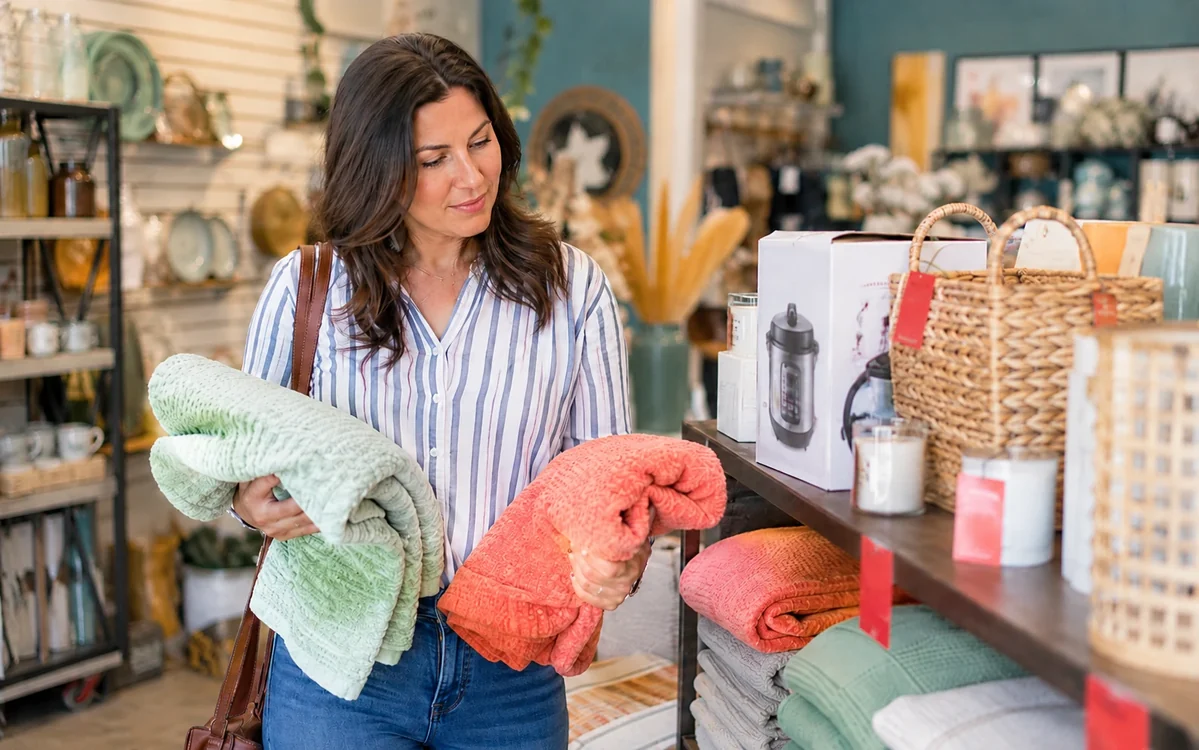
4. Towels and bedding
Sheets, comforters, bath towels, throw blankets, and pillows go on sale constantly. Department stores, home stores, warehouse clubs, and online retailers all rotate discounts because these items are easy to mark up and easy to promote.
The trick is not buying the cheapest version; it is buying decent quality at the right time. Look for cotton content, stitching, return policies, and actual dimensions. A cheap towel that turns into sandpaper after two washes is not frugal. It is just laundry betrayal.
5. Furniture
Furniture loses its shine fast. The second a table, dresser, chair, or bookshelf leaves the store, it becomes “used,” even if nobody has done anything more scandalous than set a lamp on it.
For solid wood pieces, secondhand is often better than new flat-pack furniture at the same price. Check estate sales, local marketplaces, consignment shops, and moving sales. Skip anything with mystery smells, structural damage, or upholstery you cannot realistically clean.
6. Exercise equipment
People buy exercise equipment with the confidence of a person who has never met January 19th. Then a few weeks later, that same treadmill becomes a laundry rack with cup holders.
That is why used dumbbells, benches, resistance bands, bikes, rowers, and treadmills are everywhere. If you are testing a new habit, buy used first. Upgrade later if the habit actually survives real life.
7. Kids’ clothes
Kids grow like they are being paid by the inch. Paying full price for every jacket, dress, pair of shoes, and seasonal outfit is a losing game, especially for items worn only a handful of times.
Look for consignment stores, hand-me-down swaps, clearance racks, and end-of-season sales. Spend more only where it matters: good shoes, winter coats, and anything used daily. For special occasion outfits, secondhand is usually the grown-up answer in the room.
8. Books
Books are worth buying. They are not always worth buying at full retail. Libraries, used bookstores, ebook deals, local swaps, and thrift stores can cover a huge amount of everyday reading without turning your shelves into a financial crime scene.
The exception is simple: buy full price when you want to support a favorite author, need a specific new release, or know you will actually keep and reread it. Otherwise, there is no shame in letting someone else pay the new-book tax.
9. Tools you only need once
A drill you use every month is worth owning. A tile saw for one bathroom repair is usually not. The same goes for carpet cleaners, pressure washers, specialty saws, ladders, and yard tools that only come out for one project.
Before buying, check rental counters, neighbor groups, tool libraries, and local hardware stores. The question is not “Can I afford this tool?” The better question is “Will I use it enough to deserve storage space in my garage?”
10. Phone accessories
Phone cases, screen protectors, charging cables, stands, and mounts are often priced like tiny luxury goods despite being mass-produced plastic and wire. Buying them from the first display you see is how convenience quietly wins again.
Compare prices before checking out, especially when buying a new phone. The accessory wall at the carrier store is rarely where bargains go to live. Buy protection, yes. Just do not pay museum-gift-shop prices for it.
11. Seasonal clothing
Coats, swimsuits, boots, sandals, sweaters, and summer dresses all have obvious buying windows. The worst time to buy is usually right when the weather makes you want them. That is when stores know you are emotionally compromised by temperature.
Buy at the end of the season when possible. Keep a simple list of what your family will need next year, then shop clearance with a plan. Future-you will appreciate it, assuming future-you can still find the storage bin.
The bottom line
The best savings habit is not saying no to everything. That gets old fast and makes life feel smaller than it needs to be. The better habit is knowing which purchases have obvious discount patterns, strong secondhand options, or inflated convenience pricing.
Pay full price when it truly matters. For everything else, slow down, check the alternatives, and make the store earn your money. Civilization may be a mess, but at least your receipt can be slightly less insulting.
This connects closely with $25 rule I use before buying home items. It also fits with what I check before buying anything over $50, because the same small decisions tend to overlap in real life.