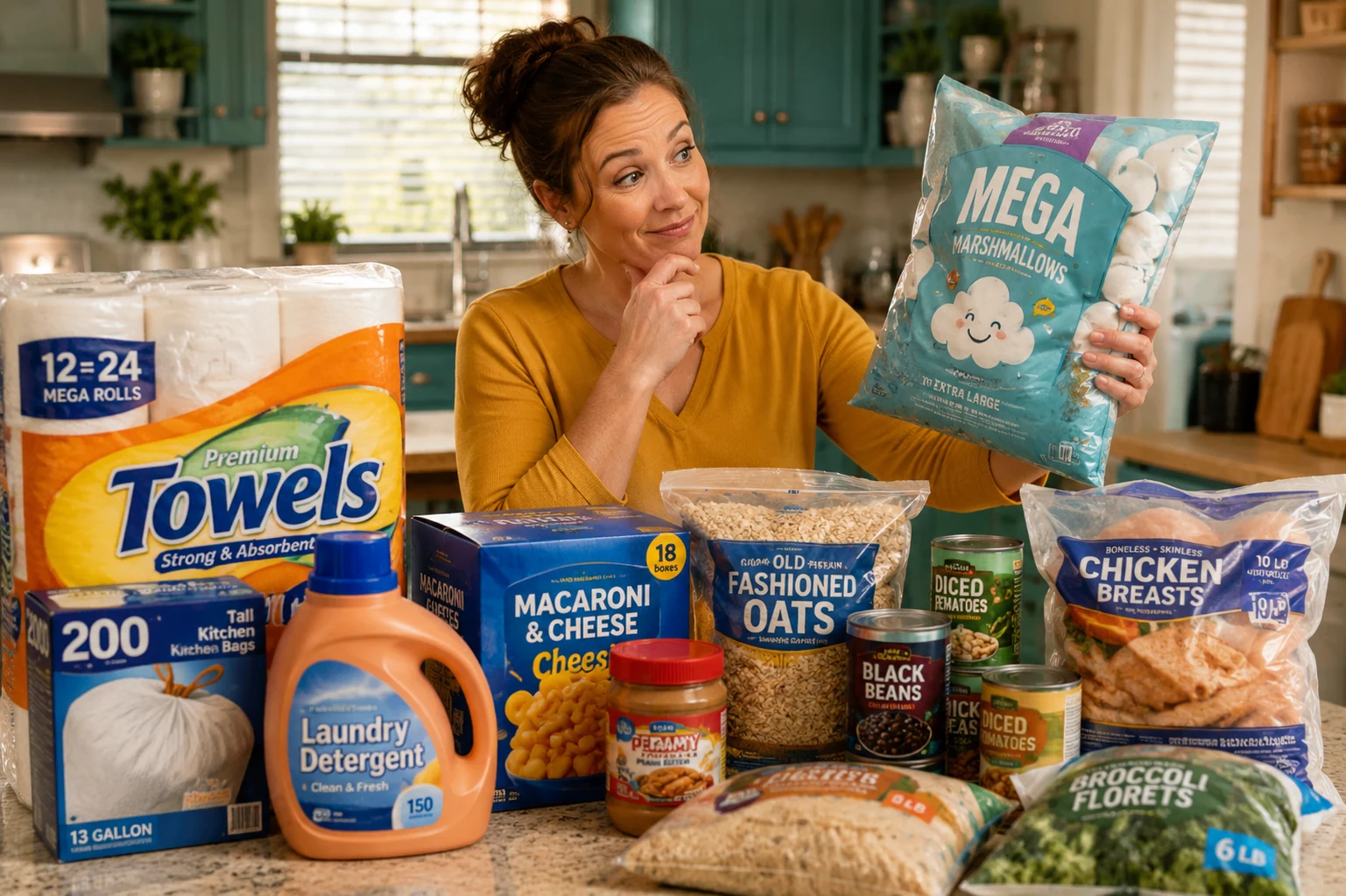
Bulk buying can be useful, but the large package has a talent for looking economical before it has earned the title.
I once bought a giant package of a snack everyone claimed to love. Apparently they loved it only when the package was small enough to feel special. By the time we reached the final third, that snack had become a household obligation.
These days, I buy larger quantities only when the numbers, storage space, and actual household habits all agree. A lower unit price does not help if half the product expires, gets forgotten, or spends two years occupying the only useful shelf.
Faye’s rule: If I would not buy the normal size twice, I do not need the warehouse size once.
1. Why buying more is not automatically saving more
A bigger package can lower the cost per ounce, roll, sheet, or serving. It can also lock up more money at once and create more opportunities for waste.
Buying more saves money only when the extra quantity gets used. The total at the register still matters, especially if the larger purchase crowds out groceries or household needs for the rest of the week.
2. Check the unit price before being impressed by the package
The oversized box, bold warehouse label, and dramatic stack of individually wrapped items can make a purchase feel like a bargain before any arithmetic has occurred.
I compare the unit price rather than trusting the package size. Sometimes the regular store size is cheaper during a sale. Sometimes the bulk version wins by only a few cents, which may not justify storing six months of it.
3. Buy in bulk only when the household uses it consistently
The best bulk purchases are boring things that disappear at a predictable pace. There is little mystery around whether the household will eventually use toilet paper, rice, or the coffee everyone drinks every morning.
Consistency matters more than enthusiasm. People are wonderfully confident about their future habits while standing beneath warehouse lighting.
4. Paper products and household basics that usually make sense
Paper towels, toilet paper, tissues, trash bags, and certain basic supplies are often sensible larger purchases when the unit price is lower and there is a dry place to store them.
Nonperishable basics are easier to buy ahead because they do not demand a race against the calendar. I still check quality, package count, and whether the larger size is actually cheaper.
5. Pantry staples that work only when storage is realistic
Rice, pasta, canned tomatoes, beans, oats, flour, and similar staples can work well in larger quantities if they are foods the household already uses.
A pantry staple is only a bargain when it stays visible, dry, and easy to reach. I avoid buying so much that older food disappears behind newer food and quietly turns into an archaeological layer.
6. Frozen foods that earn their freezer space
Frozen vegetables, fruit, meat, bread, and prepared ingredients can be useful bulk buys when they fit the way the household actually cooks.
Freezer space should go to foods that solve real meals. A giant frozen novelty item is less helpful if it blocks the ingredients I reach for every week.
Faye’s rule: Storage space is part of the price, even if the receipt refuses to mention it.
7. Items I never buy in bulk just to try them
A warehouse-sized package is a terrible introduction to an unfamiliar flavor, cleaner, personal-care item, or specialty food.
I test the normal size before committing to the large one. If the product disappoints, I want one small mistake, not a twelve-pack of evidence.
8. Products with short expiration dates
Fresh produce, dairy, bakery items, and refrigerated foods can look tempting in larger quantities, but the household has to use them before quality drops.
I estimate realistic use, not the ambitious version of us who suddenly eats salad twice a day. Freezing or sharing can help, but only when that plan is specific and immediate.
9. Snacks the household gets tired of halfway through
Snacks are one of the easiest bulk-buying traps because everyone may enjoy the first few servings. Repetition can turn a favorite into something nobody wants to see again.
Variety matters more with snack foods than the unit price suggests. A lower price per bag does not save money when the final bags become pantry furniture.
Faye’s rule: A bargain is not a bargain when the household gets tired of it before the package gets smaller.
10. Cleaning products that take years to finish
Some cleaning supplies make sense in larger containers, especially products used regularly. Others last so long that the bulk size becomes unnecessary clutter.
I buy the amount that matches my real cleaning routine. I do not need industrial quantities merely because I briefly imagined becoming the sort of person who deep-cleans grout every Saturday.
11. The storage-space test
Before buying the large size, I decide exactly where it will go. Not generally. Not somewhere in the garage. An actual shelf, cabinet, freezer section, or closet space.
Storage space is part of the price, even if the receipt refuses to mention it. A bargain that blocks a doorway, crowds a counter, or hides everything behind it creates a different kind of cost.
12. The three questions I ask before buying the large size
My final check is simple: Do we already use this regularly? Is the unit price genuinely better? Do I have a specific place to store it?
If one answer is no, I usually buy the normal size. That tiny pause has saved me from more oversized optimism than any warehouse coupon ever has.
The bottom line
Bulk buying works best when it supports ordinary routines instead of creating new chores. The right larger purchase can reduce shopping trips and lower the cost of things the household already uses.
The wrong one becomes clutter, waste, or a long-term commitment to a snack everyone has quietly abandoned.
I am curious which items consistently make sense in your household and which oversized purchase taught you a lesson. Most of us have at least one package still judging us from a shelf.
This connects closely with pantry reset that stopped duplicate purchases. It also fits with grocery habits that save money, because the same small decisions tend to overlap in real life.