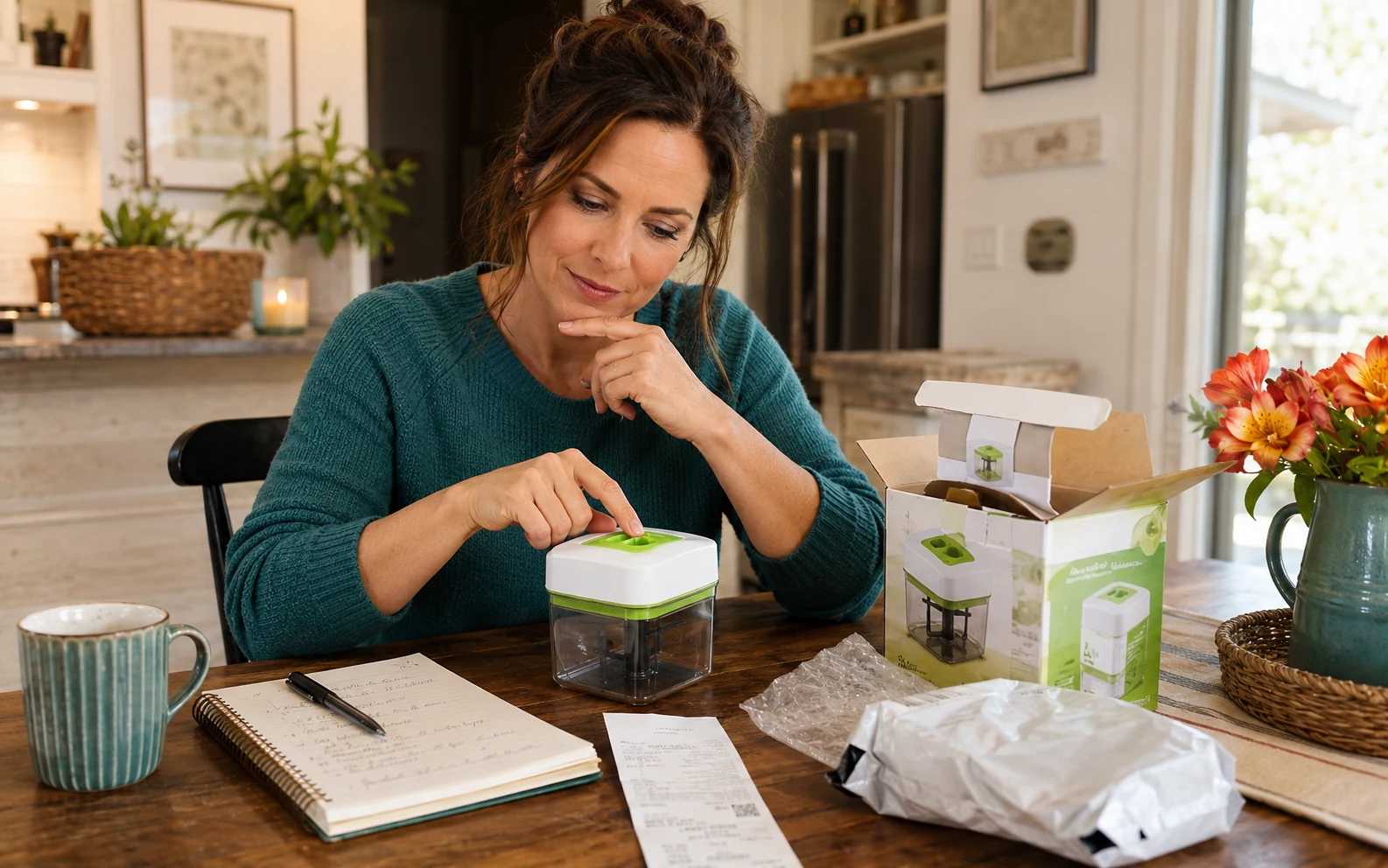
You've seen the video. Everyone's seen the video. Somebody pours something, peels something, or wipes something, the result is weirdly satisfying, and forty thousand comments are screaming "I NEED THIS." Your thumb is already hovering over the link.
I'm not here to tell you viral products are all junk. Some of my most-used kitchen tools came off my feed, and I'll happily admit it. But I've also owned the gadget graveyard: the drawer of things that were thrilling for one weekend and invisible ever after.
The difference between those two outcomes usually isn't the product. It's whether I asked a few honest questions before buying. Here's the six-question test that's saved me hundreds of dollars — and occasionally given me permission to buy something great without guilt.
1. Was I looking for a solution before I saw the ad?
This is the big one, and it's where most impulse buys fail. There's a real difference between "I've been annoyed by this problem for months and here's a fix" and "I didn't know this problem existed until ninety seconds ago."
If the product solves something you've genuinely complained about — your shower takes forever to warm up, your back hurts in your desk chair, your produce keeps going bad — it has a real shot at earning its keep. If the ad had to first convince you that you have the problem, be careful. Manufacturing the disease to sell the cure is the oldest trick in marketing.
2. What does it replace, and what did that cost?
Every product competes with something — even if that something is "a towel and two extra minutes." A $35 gadget that replaces a $200 service call or a recurring expense can be a genuine bargain. A $35 gadget that replaces a wooden spoon is a $35 wooden spoon.
Run the math out loud: what am I doing about this problem today, what does that cost me in money or time, and does this purchase actually beat it?
3. Will I use it the tenth time, not the first?
Everything gets used once. The first use is novelty, and novelty is free entertainment — that's why unboxing feels so good. The honest question is whether you can picture the tenth use. Where does it live in your house? Does using it require setup, cleanup, or charging? Friction kills gadgets. The products that survive in my home are the ones that are easier to use than to ignore.
Faye's rule of thumb: Divide the price by the number of times you'll honestly use it in a year. $40 for something you'll use twice is $20 a use. $40 for something you'll use every week is 77 cents. Same price tag, completely different purchase.
4. What do the three-star reviews say?
Skip the five-star reviews (too excited to be useful) and the one-star reviews (often shipping complaints or user error). The three-star reviews are where the truth lives: "works, but smaller than it looks," "great for two months, then the seal wore out," "does the job but it's loud." These are people who actually used the thing and have no axe to grind.
While you're there, check the dates. A product with reviews spanning a couple of years has a track record. A product where every review landed in the same six weeks is brand new — which doesn't make it bad, just unproven.
5. Can I find it cheaper — or is it the same item with a different sticker?
Before buying from the video's link, spend ninety seconds searching the product's generic description — "vegetable chopper with container," "neck stretcher pillow" — on the big retail sites. Sometimes the viral version is a genuinely better-made original. Just as often, an identical item exists for a third of the price, and the markup is paying for the ad you just watched.
If the branded version costs more, the question becomes: is the difference real (better materials, warranty, support) or is it just the logo?
6. What happens if I wait 48 hours?
The simplest test on this list, and the most powerful. Put it in the cart. Close the app. If you're still thinking about it in two days, that's real interest — buy it without guilt. If you've forgotten it existed, the algorithm wanted it more than you did.
The urgency in those ads — countdown timers, "almost sold out," tonight-only pricing — exists precisely to stop you from doing this. Genuine products survive a two-day wait. Manufactured demand doesn't.
When the answer is yes, enjoy it
Here's the part frugality articles usually skip: sometimes a product passes all six questions, and when it does, you should buy it and feel great about it. The point of this test isn't to never buy anything fun off the internet. It's to make sure the things that earn a place in your home actually earn it — so your money goes to the rare products that genuinely make life easier, and not to the drawer.
I keep this list short enough to run through in my head in under a minute, right there in the checkout flow. One minute, six questions, hundreds of dollars a year. That's a trade I'll take every time.
This is also where my checklist before buying anything over $50 earns its keep. For smaller home purchases, I use the $25 rule before buying household items so a clever video does not quietly become a clutter problem.