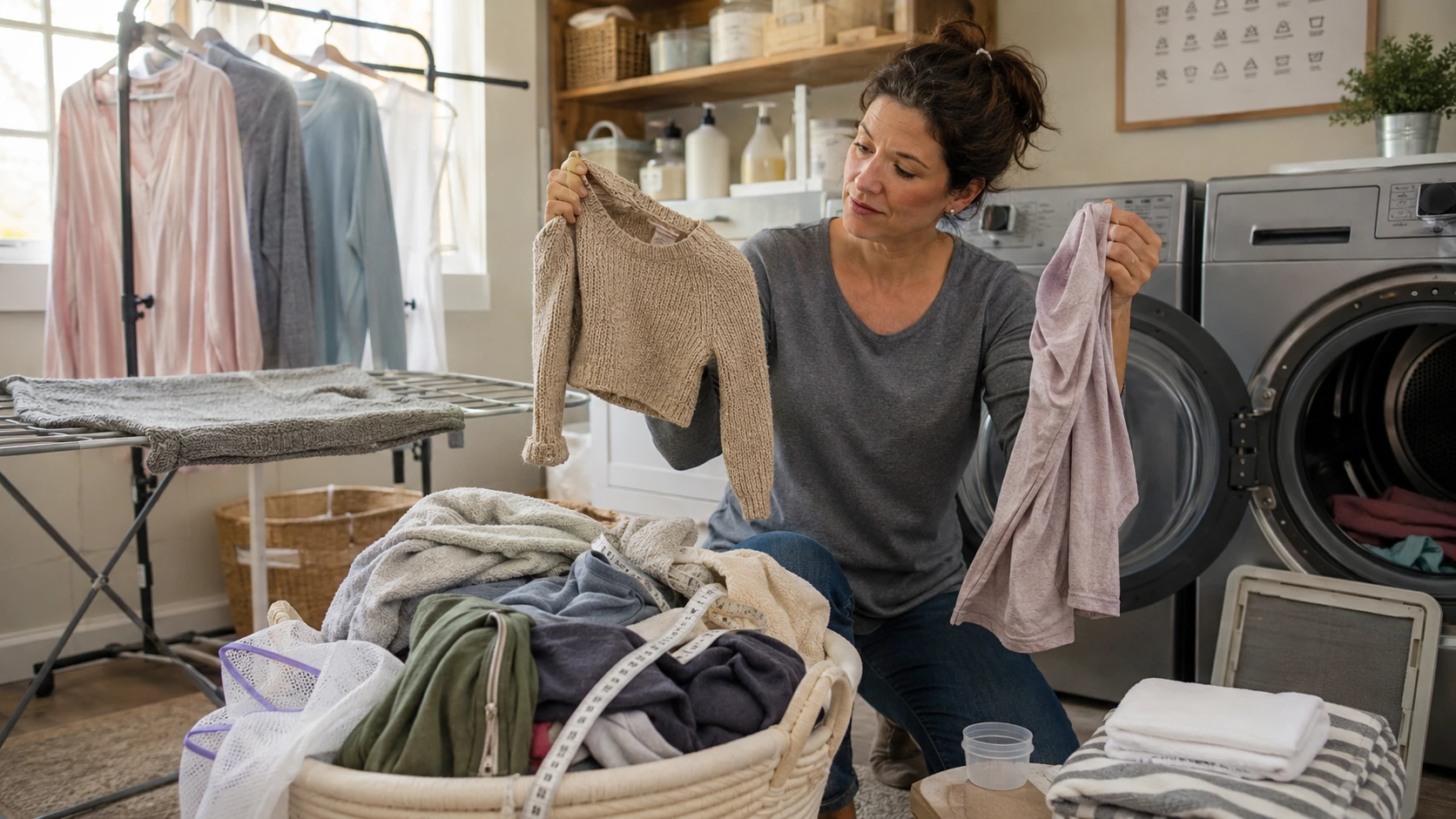
Laundry damage rarely announces itself with a tiny trumpet. More often, a favorite shirt slowly loses its shape, towels become strangely stiff, a sweater pills into a small weather system, or elastic gives up several months before the rest of the garment.
Most laundry wear is cumulative rather than dramatic. Fiber type, fabric construction, dye, trim, washing frequency, detergent, mechanical action, heat, drying time, and storage all matter. Good care cannot make clothing immortal, but it can keep ordinary habits from doing unnecessary damage.
I learned this after shrinking a knit top that had survived years of normal washing and exactly one impatient high-heat cycle. The dryer did not betray me. I simply gave it instructions better suited to bath towels than knit fabric.
Faye’s rule: The care label wins every argument. General laundry advice is useful only when it does not contradict the garment or appliance instructions.
Care labels are instructions, not decorative confetti
The Federal Trade Commission’s Care Labeling Rule requires manufacturers and importers to provide regular care instructions for most covered apparel. Those instructions may use words, symbols, or both.
A label tells me the safe care method the maker is willing to recommend. It may address washing, bleaching, drying, ironing, and professional cleaning. It does not necessarily list every possible method, but ignoring it means I am choosing a method without the manufacturer’s guidance.
I check labels before the first wash, not after something has changed size. If a label says wash cold, dry low, reshape, lay flat, or professionally clean, I treat that as part of the purchase price. A garment that requires care I will never realistically provide may not be a practical buy for me.
Washing more often than necessary adds wear
Every wash introduces water, detergent, friction, flexing, and sometimes heat. Clothing also experiences rubbing during normal wear, so laundering is not the only source of damage. Still, washing an item after every brief use can add cycles it did not need.
I wash for soil, odor, sweat, hygiene, and fabric needs rather than habit alone. Underwear, socks, workout clothing, visibly dirty garments, and items used in messy work usually need prompt washing. A lightly worn outer layer may sometimes be aired, brushed, or spot-cleaned if its label and condition allow.
This is not permission to keep questionable clothing in rotation until it develops legal representation. It is simply a reminder that “worn once” and “needs a full wash” are not always identical.
Sort by fabric behavior, not only by color
Color sorting helps reduce dye transfer, but texture and weight matter too. Rough towels, heavy denim, exposed zippers, hooks, and abrasive trims can rub against lightweight knits, activewear, printed surfaces, and delicate fabrics.
I separate items that behave badly together. I close zippers, secure hooks, empty pockets, turn printed or dark garments inside out when the care instructions allow, and use mesh bags for small or snag-prone pieces. Towels usually get their own load rather than spending an hour sanding lightweight shirts.
I also avoid mixing heavily lint-producing items with fabrics that attract lint. Sorting is not a moral achievement. It is merely a practical way to reduce friction, snagging, dye transfer, and the quiet migration of white fuzz onto black pants.
More detergent does not mean cleaner laundry
Detergents differ in concentration, formulation, measuring instructions, and placement. Washer design, water hardness, soil level, and load size also affect how much product is appropriate.
I use the detergent label and washer instructions, not a dramatic splash. Too much product can be difficult to rinse and may leave residue on fabric or inside the machine. Too little may not suspend soil effectively. Concentrated detergent should go where its directions say, rather than being poured onto a delicate garment because the cap was feeling adventurous.
Fabric softeners and scent products can also leave coatings or buildup on some materials. Activewear, towels, flame-resistant garments, microfiber, and other specialty fabrics may have care restrictions, so I follow their labels rather than treating every load as a chemistry experiment.
Load size and cycle choice change the amount of friction
An overloaded washer may not let water and detergent circulate properly. A tiny load on an aggressive cycle may tumble and strike the machine more than necessary. The correct capacity and cycle depend on the washer model and the fabrics in the load.
The goal is enough room to move without choosing more agitation than the load needs. I use delicate or lower-action cycles for suitable lightweight fabrics and sturdier cycles for items that need them. I do not assume “heavy duty” means “extra clean” for everything I own.
The EPA recommends washing full loads when possible or choosing the appropriate water level or load-size setting. That guidance is about efficiency, but it also reinforces a useful point: the washer setting should match the actual load rather than whatever button my hand reaches first. EPA WaterSense guidance also notes that cold water can reduce energy use, though the garment label, soil, sanitation needs, and product instructions still control the practical choice.
Water temperature should solve a problem, not create one
Hot water can help in specific situations, but it can also contribute to shrinkage, dye loss, fiber damage, or setting certain stains. Cold water may preserve color and reduce energy use, but it is not automatically suitable for every soil, detergent, or sanitation need.
I choose the lowest temperature that safely meets the garment, stain, detergent, and hygiene requirements. That means reading the label and considering the actual reason for the wash instead of assigning every load the same temperature.
Fiber behavior differs. The University of Georgia Extension’s textile resources explain that fibers vary in strength, abrasion resistance, heat response, and tendency to pill or stretch. There is no universal temperature that is gentle and effective for every item. Understanding the fiber helps explain why two garments can react differently in the same machine.
Stain treatment is where impatience gets expensive
Aggressive rubbing can abrade fabric, spread a stain, remove dye, or distort the surface. Heat may set some stains, so putting a marked garment into the dryer before checking it can make the problem harder to correct.
I identify the fabric and stain before reaching for heat, bleach, or vigorous scrubbing. I blot when appropriate, follow the treatment product’s instructions, test carefully when advised, and avoid mixing cleaning chemicals. Chlorine bleach is not safe for every fiber, finish, or dye.
I inspect the area before drying. If the stain remains, I treat it again using an appropriate method rather than baking it into a permanent memory of lunch.
High dryer heat and overdrying can be a rough combination
Dryers add both heat and mechanical tumbling. Depending on the fabric, that can contribute to shrinkage, fading, abrasion, pilling, elastic deterioration, and distortion. Drying an item long after it is already dry adds more exposure without adding cleanliness.
I use the lowest effective heat and remove items when they are dry enough. Moisture sensors can help when they work well and the load is appropriate, but I still check mixed loads because lightweight pieces may finish before heavier ones.
I avoid repeatedly “refreshing” clean, dry clothing in the dryer merely because folding has become emotionally inconvenient. A short tumble may be permitted for some items, but every extra cycle is still another cycle.
Faye’s rule: If a garment comes out hotter than necessary, I adjust the next load instead of congratulating the dryer on its enthusiasm.
Air drying is useful, but it is not automatically gentle
Line drying and drying racks can reduce dryer heat and tumbling, but poor support can stretch garments. Direct sun may fade some dyes. Damp fabric left bunched together can develop odor or mildew.
I match the drying position to the garment’s structure. Knitwear often benefits from reshaping and drying flat when the label recommends it. Woven shirts may hang well on suitable hangers. Heavy wet items need enough support to avoid stretching seams and shoulders.
I leave space for airflow and avoid storing anything while it is still damp. If the label says tumble dry, drip dry, line dry, dry flat, or avoid direct sun, that instruction outranks my fondness for whichever drying method requires the least thought.
Fasteners, elastic, and printed surfaces need protection
Open zippers can scrape other fabrics. Hooks can snag. Drawstrings can tangle. Heat can weaken elastic and damage some prints, adhesives, trims, and stretch fibers.
I close what should be closed, secure what can snag, and reduce unnecessary surface rubbing. Turning dark jeans, printed tees, or embellished garments inside out may help protect their outer surfaces when their labels allow it. Mesh bags help contain delicate or small items.
I do not wash damaged fasteners and hope the machine will negotiate peace. A loose hook, sharp zipper, or broken underwire gets repaired or contained before it enters a load.
Different fabrics need different compromises
Towels: They need thorough washing and drying, but excessive softener may reduce absorbency on some products. I follow the towel and product instructions and avoid mixing them with lightweight clothing.
Sheets: I give them room to move and avoid packing the machine so tightly that large pieces twist around everything else. Deep pockets, elastic edges, and decorative trims may need gentler handling.
Denim: Turning it inside out and using an appropriate temperature may help reduce surface fading, but washing frequency still depends on soil, odor, comfort, and the care label.
Knitwear: Wet knits can stretch under their own weight. When instructed, I reshape and dry flat instead of hanging them from the shoulders like surrender flags.
Activewear: Stretch fibers and performance finishes may be sensitive to heat, softener, or harsh treatment. I use the label and product guidance rather than assuming gym clothes are indestructible because they survived a treadmill.
Delicates: I use suitable cycles, bags, detergents, and drying methods. “Delicate” does not mean “throw it into the normal load and hope it appreciates inclusion.”
Lint maintenance protects more than clothing
A clogged lint screen or restricted exhaust can reduce airflow and increase dryer heat. The Consumer Product Safety Commission advises using a lint filter, cleaning it before or after each use, and keeping the exhaust vent unrestricted.
I follow the dryer manufacturer’s cleaning schedule for filters, ducts, and accessible lint areas. I also clean washer dispensers, filters, gaskets, and other components according to the appliance manual. Residue and trapped moisture can affect machine performance and laundry odor.
This is maintenance, not an invitation to dismantle an appliance with a screwdriver and misplaced confidence. Work beyond routine owner care belongs with the manufacturer’s instructions or a qualified professional.
Seasonal storage can undo careful washing
Clothing stored with moisture, food residue, body oils, or untreated stains may develop odor, discoloration, or pest damage. Heavy garments can stretch on unsuitable hangers, while sharp folds may stress some fabrics over time.
I store clothing clean, completely dry, and supported appropriately. I use breathable or sealed storage based on the item, environment, and manufacturer guidance. I keep moisture-sensitive items away from damp floors and inspect long-term storage occasionally.
This is a smaller-scale version of the practical record and maintenance habits in The Home Records I Wish I Had Kept Sooner. Knowing what an item needs is much easier than guessing after a label fades or disappears.
Normal wear, residue, and damage are not the same thing
- Normal wear: Gradual change from use, friction, washing, and age.
- Shrinkage: A reduction in dimensions caused by fiber, construction, moisture, heat, or agitation.
- Fading: Loss or transfer of dye from light, washing, friction, chemicals, or heat.
- Pilling: Small fiber balls formed through surface abrasion and fiber behavior.
- Abrasion: Surface wear from rubbing against other fabrics, hardware, or the machine.
- Stretching: Permanent or temporary distortion from weight, handling, heat, or insufficient support.
- Elastic deterioration: Loss of recovery caused by age, heat, chemicals, or repeated strain.
- Residue or buildup: Product remaining on fabric or in the machine because of dose, placement, water, or rinsing conditions.
- Mildew or persistent odor: A moisture problem, not simply proof that more fragrance is required.
I diagnose the pattern before changing the routine. Stiff towels, white streaks, fading, stretched necklines, and musty odor do not all have the same cause or solution.
My compact laundry-care checklist
- Read the care label before the first wash.
- Wash items when they need it, not automatically after every brief wear.
- Sort by color, weight, texture, lint, fasteners, and fabric behavior.
- Empty pockets, close zippers, and secure hooks.
- Use mesh bags or inside-out washing where appropriate.
- Measure detergent according to its label and the load conditions.
- Match cycle, load size, and water temperature to the fabrics.
- Treat stains gently and inspect before drying.
- Use the lowest effective dryer heat and avoid overdrying.
- Reshape and support air-dried items correctly.
- Clean lint screens and maintain appliances according to their manuals.
- Store clothing clean, fully dry, and properly supported.
Changes I can make with the next load
- Remove one delicate or lightweight item from a rough towel load.
- Check the detergent dose instead of filling the cap by instinct.
- Close zippers and empty every pocket.
- Choose a cycle based on the fabrics rather than habit.
- Lower the dryer heat when the labels allow it.
- Take dry pieces out before the heaviest item finishes.
- Inspect stains before anything enters the dryer.
- Clean the lint screen and check the appliance manual for routine maintenance.
Small adjustments fit the same practical logic as The Repair-or-Replace Math I Use Before Buying a New Appliance: caring for what I already own is useful, but not every worn item or failing machine deserves endless intervention.
The bottom line
Clothes wear out because they are worn, washed, dried, stretched, exposed to light, and asked to survive ordinary life. No laundry routine eliminates that.
The goal is to stop adding avoidable wear. I follow care labels, sort by fabric behavior, measure detergent, choose appropriate cycles, treat stains before heat, avoid overdrying, support wet garments properly, maintain the machines, and store clothing clean and dry.
That does not turn laundry into a science project. It turns a handful of automatic habits into deliberate ones, which is usually cheaper than repeatedly replacing the shirt that “mysteriously” became suitable for a much smaller relative.
Official sources used
- Federal Trade Commission: Complying With the Care Labeling Rule
- Federal Trade Commission: Care Labeling Rule
- U.S. Environmental Protection Agency WaterSense: Laundry-Room Efficiency Guidance
- University of Georgia Extension: Understand Your Fibers
- Consumer Product Safety Commission: Clothes-Dryer Lint and Vent Safety
- Whirlpool: Washer and Dryer Cycle, Sorting, and Care Guidance