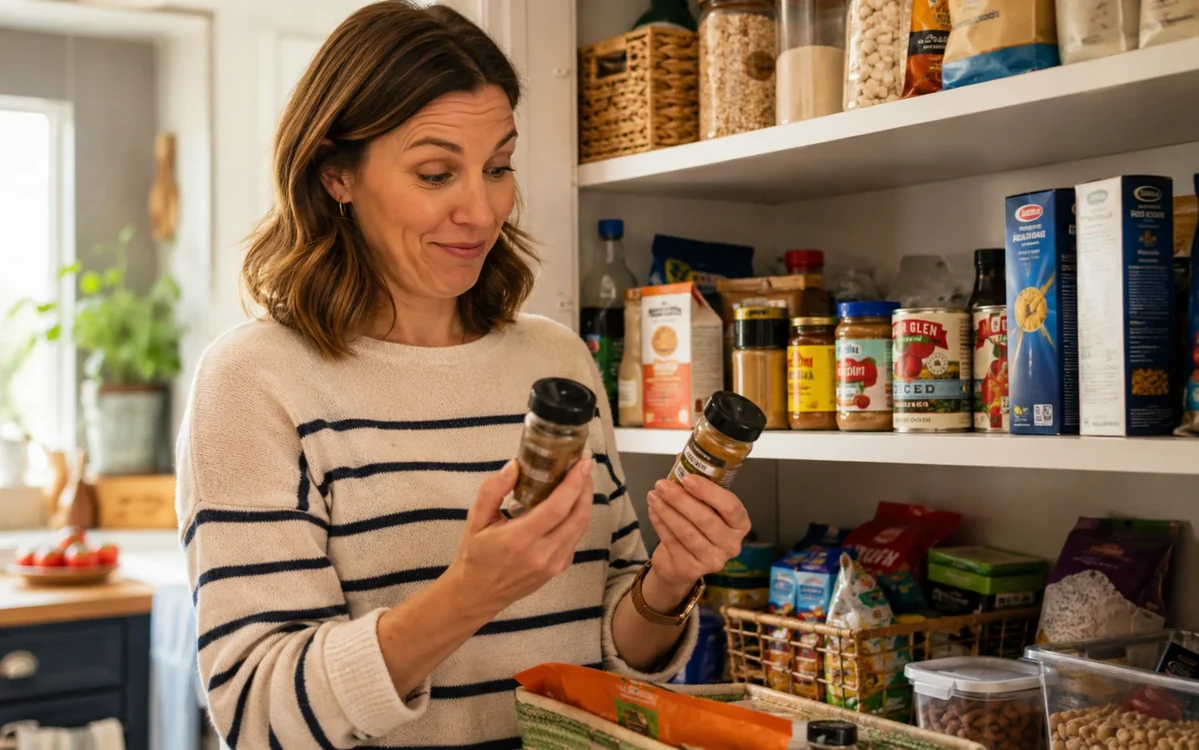
I used to think duplicate buying happened to disorganized people in sitcoms. Then I found three jars of cumin, two half-open boxes of pasta, and enough black beans to survive a minor apocalypse.
The problem was not that I lacked food. The problem was that I could not see what I had, so I kept buying the same things over and over like my pantry had a memory-wiping device.
This is the quick pantry reset that helps me stop the duplicate-buying nonsense without turning my kitchen into a color-coded lifestyle project. It takes about twenty minutes, and it saves more money than it has any right to.
Faye’s rule: If I can’t see it, apparently I believe it no longer exists.
1. Pull out only one shelf at a time
If you empty the entire pantry at once, you are no longer doing a quick reset. You are starring in your own stress event. Start with one shelf, clear it, wipe it, and put things back with intention before moving on.
One shelf at a time keeps the job realistic. The goal is progress, not a dramatic floor pile that ruins your afternoon.
2. Group duplicates together
This is where the magic happens. Put all the pasta together, all the canned goods together, all the snacks together, all the spices together. When duplicates sit next to each other, they stop hiding.
Last time I did this, I found two open bags of rice and three nearly identical salad dressings. You cannot stop buying duplicates if your duplicates are living separate secret lives.
3. Make a “use first” zone
Pick a small bin, basket, or even one visible corner of a shelf and make it your use-first zone. This is where you put half-used boxes, items close to expiration, and anything you forgot you had but should clearly eat before buying more.
A use-first zone turns pantry guilt into an actual plan. It is much easier to use what you have when it is not buried behind five newer things.
4. Check expiration dates without being dramatic
Not everything turns evil the second the date passes, but a pantry reset is still the right time to check what is stale, expired, or never getting used. Toss obvious trash. Keep what is still fine. Use common sense instead of panic.
The point is not purity. It is visibility. You are looking for what needs to be used, what needs to go, and what you absolutely do not need to buy again this week.
Faye’s rule: If I bought it for one recipe and never touched it again, it goes in the oddball basket so it can’t trick me twice.
5. Write a short “do not buy” list
This one matters more than people think. If you know you already have enough oats, canned tomatoes, crackers, or peanut butter, write it down before the next grocery run.
A short “do not buy” list is often more useful than a shopping list. Stores are very good at helping you remember what to buy. They are terrible at helping you remember what to stop buying.
6. Move everyday staples where you can actually see them
The things you use most should not live in the darkest back corner like they owe someone money. Rice, pasta, cereal, snacks for lunches, canned basics, and baking staples should be easy to grab and easy to track.
If you cannot see it, your brain starts acting like you do not own it. That is how a perfectly normal person ends up buying another box of sandwich bags while standing in a house that already contains two.
7. Put oddball ingredients into one basket
Every pantry has the randoms: a specialty vinegar, half a bag of coconut flakes, one weird grain from an optimistic recipe phase, or a seasoning blend bought for a single meal. Put those things together instead of scattering them everywhere.
One basket for oddball ingredients keeps “maybe someday” from becoming “buy it again by accident.”
8. Plan two meals from what is already there
Once you can actually see the pantry, use it. Build two meals around what you already have before you shop again. Pasta night, taco bowls, soup, chili, fried rice, quesadillas, grain bowls — none of this needs to be complicated.
The fastest way to shrink pantry waste is to eat the pantry on purpose. A reset is nice. Using the food is what actually saves the money.
9. Take one quick photo before grocery shopping
This is the low-effort trick that works embarrassingly well. Snap one photo of the shelves or your use-first zone before heading to the store. Then you have proof of what is at home when your brain starts negotiating in aisle seven.
A pantry photo is basically insurance against fake urgency. It helps you separate “we need this” from “I forgot we already own this.”
Faye’s rule: A pantry reset is supposed to save money, not become a three-hour container hobby.
10. Repeat monthly, not perfectly
You do not need a flawless system. You need a light reset often enough to keep chaos from rebuilding itself. Once a month is plenty for most households, and even a quick ten-minute version helps.
Consistency beats perfection here. A pantry you can read is infinitely more useful than a pantry you reorganize once, admire for six days, and never touch again.
The bottom line
A pantry reset is not glamorous, but it is one of the simplest ways to stop wasting money on duplicates, expired food, and vague grocery-store guesswork.
The biggest win is not having a prettier shelf. The biggest win is knowing what you already own, using it on purpose, and walking into the store with fewer blind spots.
If there is one item you always accidentally rebuy — spices, pasta, canned tomatoes, snack bars, whatever — tell me. I genuinely want to know what keeps fooling other people too.
This connects closely with what I buy in bulk and what I never do. It also fits with grocery habits that save money, because the same small decisions tend to overlap in real life.