Groceries are sneaky. Rent is one big obvious number, but food spending leaks out of your wallet in twenty small trips a month, and most of us genuinely have no idea what we spend. When I finally added ours up, I nearly dropped my coffee — which, yes, I made at home.
The good news: cutting your grocery bill doesn't require extreme couponing, a chest freezer full of mystery meat, or eating rice and beans until payday. These are the ten habits that made the biggest difference for us, roughly in order of impact.
1. Shop your kitchen first
Before any grocery run, take ninety seconds and look at what you already have. Most households are sitting on a week of "orphan" food — half a bag of pasta, a can of beans, frozen chicken from three weeks ago. Building even two meals a week around what's already there is the single fastest cut you can make.
2. Plan around the sales flyer, not your cravings
Most people plan meals first and shop second. Flip it. Pull up your store's weekly ad, see what proteins and produce are actually discounted, and build the week's meals around those. Same dinners, different order of operations, noticeably smaller receipt.
3. Give every trip a list — and a ceiling
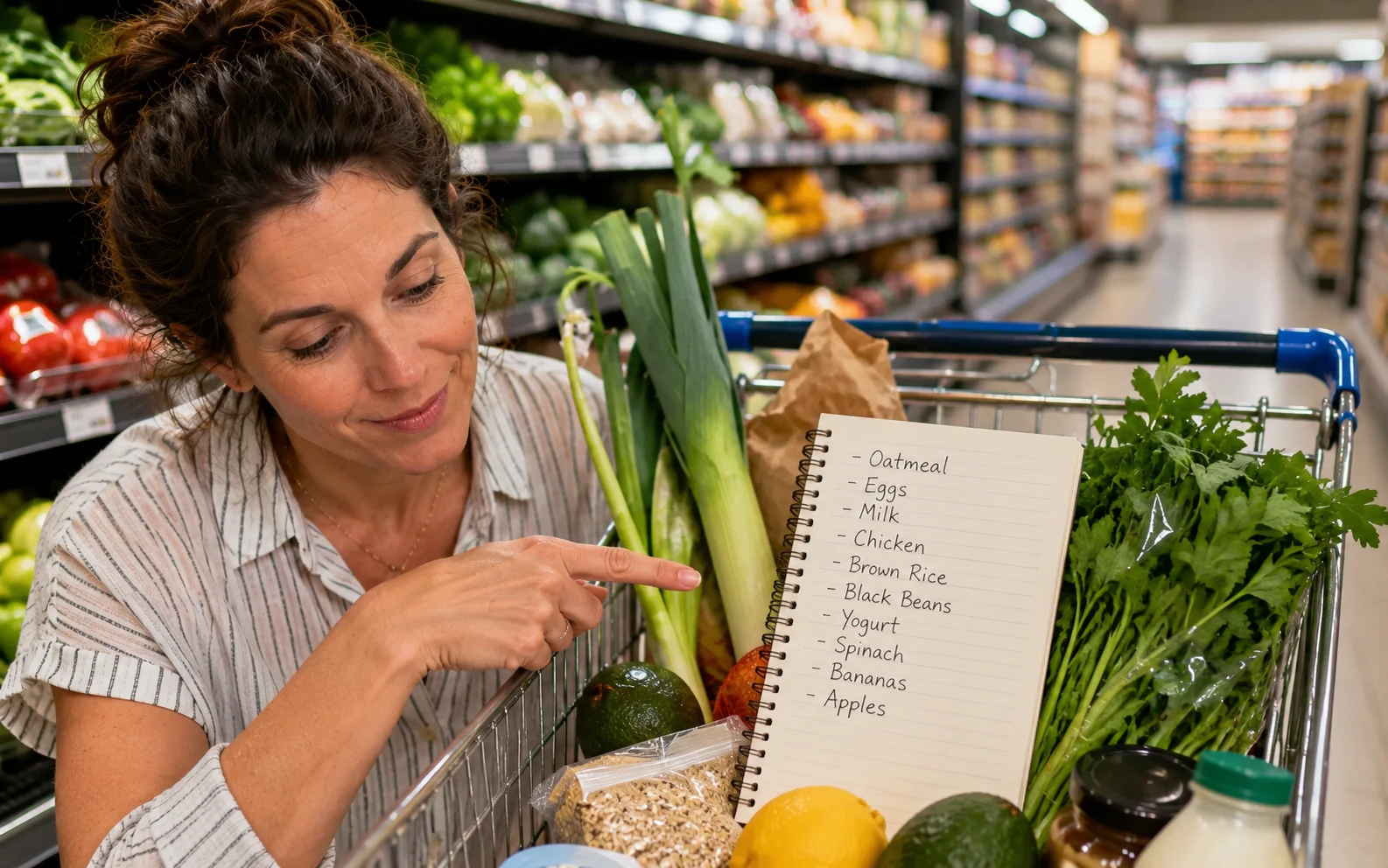
A list keeps you honest about what you need. A ceiling keeps you honest about what you spend. We give ourselves a number before walking in, and treat it like a game to come in under it. It sounds silly. It works.
4. Eat something before you go
Oldest advice in the book because it's true. Hungry shoppers buy more of everything, and almost all of it is snacks. A handful of crackers before you leave the house is worth real money.
5. Learn your store's markdown rhythm
Every store discounts meat, bakery, and produce on a schedule — usually early morning. Ask an employee when markdowns happen. Buying tonight's dinner at 40% off because it hits its sell-by date tomorrow isn't settling; it's strategy.
6. Switch two or three staples to store brand
You don't have to go full generic. Pick the items where the name brand genuinely isn't better — flour, sugar, butter, canned tomatoes, frozen vegetables, basic cereals — and switch just those. It's often the same product in different packaging, at 20–40% less.
Faye's quick math: Swapping eight everyday staples to store brand saved us about $11 a week. That's nearly $50 a month from a decision we made once and never thought about again.
7. Treat the perimeter as the meal, the aisles as the supplement
Produce, meat, dairy, and bread live on the store's outer ring, and per serving they're almost always cheaper than the boxed and bagged versions in the middle. The inner aisles aren't off-limits — they're just where the markup lives, so go in with a purpose.
8. Cook once, eat twice
Doubling a recipe takes ten extra minutes and almost no extra effort. Tomorrow's lunch is already done, which means tomorrow's $14 takeout sandwich never happens. Leftovers aren't a punishment; they're a raise.
9. Do a weekly "use it up" night
One dinner a week, the menu is simply whatever needs to be eaten. Stir fry, soup, omelets, and quesadillas will absorb nearly anything in your crisper drawer. Americans throw away a shocking share of the food they buy — this habit is how you stop paying for the trash can's dinner.
10. Audit the subscriptions hiding in your cart
Sparkling water, specialty coffee, the fancy yogurt only one person eats — every cart has a few items that show up out of pure habit. Once a month, look at your receipt and ask: did we actually enjoy this, or do we just always buy it? Keep what you love. Cut what's on autopilot.
The bottom line
None of these habits is dramatic on its own. That's the point. Saving $200 a month on groceries isn't one big sacrifice — it's ten small decisions that stop the leaks. Pick two from this list, run them for a month, and check your receipts. I think you'll be surprised.
This connects closely with pantry reset that stopped duplicate buying. It also fits with what I buy in bulk and what I never do, because the same small decisions tend to overlap in real life.